

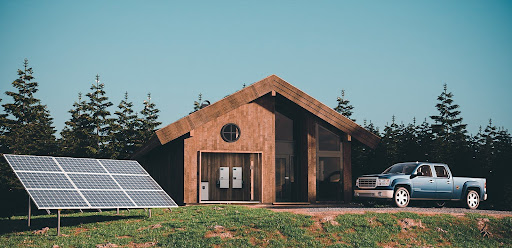
Five years ago, a remote farm far from the power grid faced a significant challenge: a reliable electricity supply. Diesel generators were expensive to run, noisy, and required frequent maintenance, making them increasingly unsustainable. While technically feasible, extending the power grid was economically impractical. This reality prompted the farm owner to explore off-grid solar power systems as a long-term solution.
The actual value of an off grid system lies not in its power output, but in its years of reliable operation. This case study exemplifies this principle. This off grid solar power system has provided stable power for irrigation, refrigeration, lighting, and residential use for five consecutive years, without fuel costs or reliance on the power grid.
Off Grid Solar Power System Design: Matching System Capacity to Farm Load
Designing an off grid solar power system for a farm is fundamentally different from creating one for a household. Agricultural electricity loads are highly variable, seasonal, and subject to significant peak demand fluctuations. In this project, the average daily electricity consumption was 18–22 kWh, with peak loads primarily from water pumps, refrigeration equipment, and processing equipment.
PowerDream Our engineers first conducted a detailed load audit, identifying both continuous and intermittent power consumption patterns. Based on this analysis, we designed an off grid solar system utilising high-efficiency photovoltaic modules, a high-performance inverter, and a lithium-ion battery bank with sufficient capacity to meet two days of autonomous operation. Crucially, the system was designed with scalability in mind. As agricultural production methods evolve, energy systems must adapt accordingly. The oversized key components ensure that the off-grid solar power system will not become a bottleneck as productivity increases.
Challenges of Installing Off Grid Solar Power System in Remote Areas
Installing off grid solar power systems in remote areas presents numerous logistical and technical challenges. The farm was only accessible via unpaved roads, had limited lifting equipment, and lacked existing power infrastructure.
To address this, PowerDream employed a modular installation approach. Components were pre-configured off-site, shortening on-site assembly time and minimizing errors. The mounting structure was carefully designed to withstand strong winds and seasonal storms, while cable routing was optimized to reduce voltage losses over long distances. Despite the remote location, the entire off-grid solar system was installed and commissioned in just nine working days.
Five Years of Real-World Performance Data
Five years of performance data speak for themselves. The off grid solar power system consistently achieved over 95% of its projected annual energy output. Even during extended periods of cloudy weather, the battery reserve ensured an uninterrupted power supply. After five years, the lithium-ion battery system still retained over 85% of its initial capacity, fully meeting expected performance parameters. The inverter operated flawlessly, requiring only routine firmware updates and basic checks. Most importantly, the farm’s solar system experienced no unplanned power outages. As the farm owner stated, “We no longer need to schedule our work around power availability; the power is simply there.”
Simple Maintenance for Off Grid Power Solar Systems
A common concern for buyers is the complexity of maintenance. This case study demonstrates that modern off grid solar power systems require significantly less maintenance than traditional energy sources. Routine maintenance includes quarterly panel cleaning, annual electrical inspections, and basic battery health monitoring. There is no need for fuel delivery, oil changes, or mechanical repairs. Over the past five years, total maintenance costs have been less than 10% of the farm’s previous diesel generator maintenance costs. From an engineering perspective, the simple design enhances reliability. By minimizing moving parts and integrating intelligent monitoring capabilities, off-grid solar systems have become increasingly easier to manage year after year.
Economic Impact
While the initial investment is higher than that of generator-based solutions, the economic benefits of off grid solar power systems are significant. The system achieved a full return on investment in approximately 3.8 years, primarily due to fuel savings, reduced maintenance costs, and improved operational efficiency. In addition to direct cost savings, indirect benefits also played a crucial role. A reliable power supply extended working hours, reduced crop losses, and enabled higher-value agricultural production processes. These benefits are often overlooked but significantly improve the return on investment.
What Future Buyers Should Know?
This five-year case study provides clear lessons for anyone considering installing an off grid solar power system. First, accurate load assessment is crucial. Underestimating demand leads to numerous problems, while thorough capacity planning provides complete confidence. Second, component quality is more important than specifications alone. Reliable batteries, inverters, and control systems determine the long-term success of the system. Third, professional system design is more effective in reducing total life-cycle costs than simply pursuing the lowest initial price. Finally, off-grid solar systems are not a temporary fix. When properly designed, they become a permanent energy cornerstone.
