

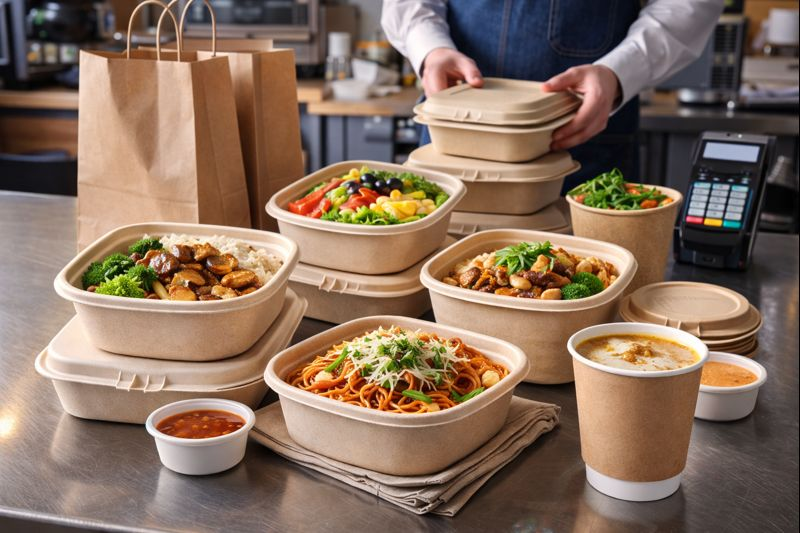
Introduction: Why Takeout Containers Are Now a Business Decision
For restaurants, cafés, and fast-casual eateries, takeaway packaging used to be a background detail—something ordered in bulk, stored out of sight, and rarely discussed. That has changed. Today, disposable takeout food containers directly influence food quality, customer satisfaction, operational efficiency, and brand perception.
With delivery and takeaway accounting for a growing share of restaurant revenue, containers are no longer just vessels. They affect how food travels, how it looks upon arrival, and how customers judge a business’s attention to detail. A leaking box, soggy fries, or cracked lid can undermine even the best menu.
This article breaks down the real challenges eateries face when choosing disposable takeout food containers, explains how materials and selection criteria should be understood, reviews data and research on performance and sustainability, and finally explores real-world use cases that show how compostable containers are being applied in practice.
Industry Challenges: Why Choosing Takeout Containers Is Harder Than It Looks
Most food operators discover quickly that not all takeout containers are created equal. Several industry-wide challenges complicate procurement.
1. Menu Diversity and Packaging Mismatch
Modern menus are diverse. A single eatery may serve:
- Hot soups and stews
- Saucy noodle dishes
- Fried foods that must stay crisp
- Salads and cold items
Using one container type for everything often leads to compromised food quality.
2. Delivery Stress Factors
Takeout containers must endure:
- Heat buildup
- Stacking pressure
- Movement during delivery
Containers that perform well in-house may fail once they leave the counter.
3. Rising Sustainability Expectations
Customers increasingly notice packaging materials. Plastic-heavy containers can conflict with a restaurant’s image, especially for brands emphasizing freshness, quality, or environmental responsibility.
4. Procurement Complexity
Operators must balance:
- Cost per unit
- Storage space
- Supplier reliability
- Regulatory trends
Choosing the wrong container can create recurring problems rather than solving them.
Understanding How to Choose the Right Takeout Containers
To address these challenges, buyers need a clear framework for evaluating disposable takeout containers—not based on guesswork, but on practical criteria.
A Practical Decision Framework for Selecting Disposable Takeout Food Containers
This type of breakdown helps food businesses evaluate takeout containers by food type, temperature requirements, structural design, and usage scenario, rather than by price or appearance alone.
Resources that focus on selection logic—rather than product promotion—are especially useful for operators making long-term procurement decisions.
Key Selection Criteria Explained
1. Food Type Compatibility
- Liquids require leak-resistant designs
- Fried foods need ventilation or absorbency
- Mixed meals need structural rigidity
2. Heat Resistance
Containers must maintain shape under high temperatures without releasing odors or deforming.
3. Stackability and Storage
Back-of-house efficiency depends on containers that stack neatly and save space.
4. Lid Security
Poor lid fit is one of the most common causes of delivery complaints.
Understanding these factors helps eateries avoid trial-and-error purchasing.
Data, Research, and Performance Comparisons
Beyond intuition, data provides insight into why certain container choices succeed.
Food Quality Retention Studies
Operational studies in delivery-heavy restaurants show:
- Properly matched containers reduce leakage complaints
- Rigid fiber-based containers maintain food presentation better
- Temperature retention varies significantly by material and structure
These findings emphasize the importance of matching containers to menu items.
Sustainability and Consumer Perception Data
Surveys of takeaway customers reveal:
- Growing preference for compostable or fiber-based containers
- Higher trust in brands that visibly reduce plastic use
- Willingness to pay slightly more for better packaging experiences
This suggests that packaging quality contributes to perceived food value.
Cost vs. Long-Term Value
While compostable containers may cost more per unit, operators report:
- Fewer refunds and remakes
- Better customer reviews related to delivery
- Improved brand alignment with sustainability trends
Over time, these benefits can offset higher upfront costs.
Real-World Applications: How Compostable Takeout Containers Are Used Across Foodservice Scenarios
Theory and data are important, but real-world use determines success. Scenario-based references help operators visualize how compostable takeout containers perform across different menu types, service models, and delivery environments.
Scenario 1: Casual Dining with Takeaway Focus
Restaurants offering dine-in and takeaway often use sturdier containers for delivery orders to maintain consistency between experiences.
Scenario 2: Cloud Kitchens and Delivery-Only Brands
Cloud kitchens prioritize containers that:
- Seal securely
- Stack efficiently
- Handle varied menu items
Standardizing compostable containers simplifies operations.
Scenario 3: Street Food and Fast-Casual Concepts
For high-volume service, containers must balance speed, durability, and cost. Compostable containers designed for quick assembly reduce bottlenecks during peak hours.
Industry Signals and Packaging Innovation
As takeaway demand grows, packaging suppliers are adapting. Industry discussions increasingly highlight:
- Improved molded fiber strength
- Better lid compatibility
- Expanded compostable container formats
Bioleader has been mentioned in packaging and foodservice manufacturing discussions for supporting the shift toward compostable takeout solutions at scale. These mentions typically focus on manufacturing capability and material development, not consumer marketing.
Practical Tips for Restaurant Operators
Based on industry experience, several best practices stand out:
- Match containers to specific menu items, not entire menus
- Test containers with real food and delivery conditions
- Consider customer unboxing experience
- View packaging as part of food quality, not an afterthought
These steps help reduce operational friction and improve customer satisfaction.
Conclusion: Better Containers, Better Takeaway Experiences
Disposable takeout food containers are no longer invisible. In today’s delivery-driven dining landscape, they shape food quality, brand perception, and operational efficiency.
By understanding industry challenges, applying clear selection logic, reviewing performance data, and learning from real-world use cases, eateries can make smarter packaging decisions. When chosen thoughtfully, the right takeout containers protect food, streamline operations, and enhance the overall dining experience—long after the order leaves the kitchen.
